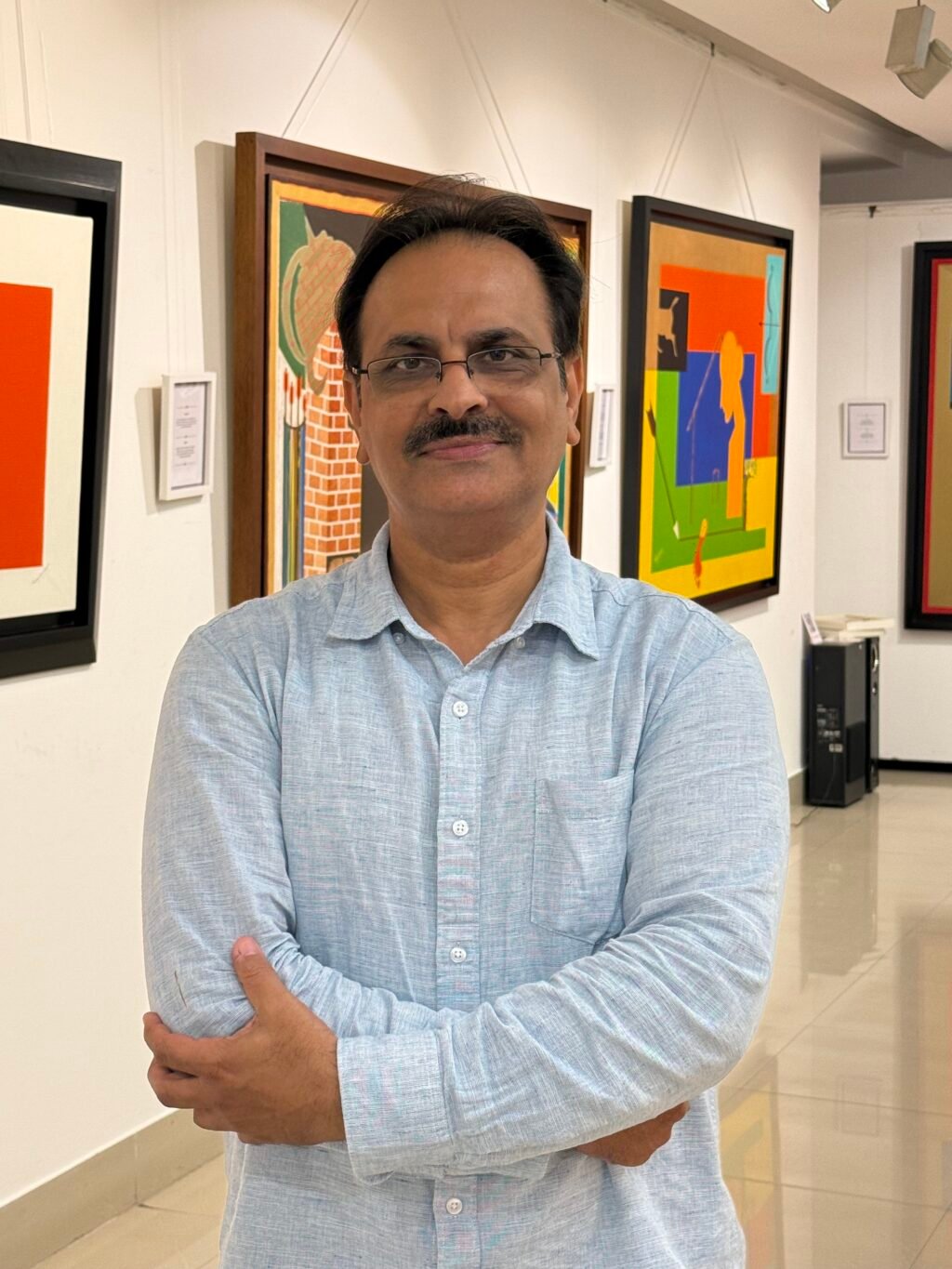
ETERNAL ECHOES: A Contemporary Visual Journey Through Indian Thought by Pankaj Sachdeva
By Monika Angrish, Editor in Chief
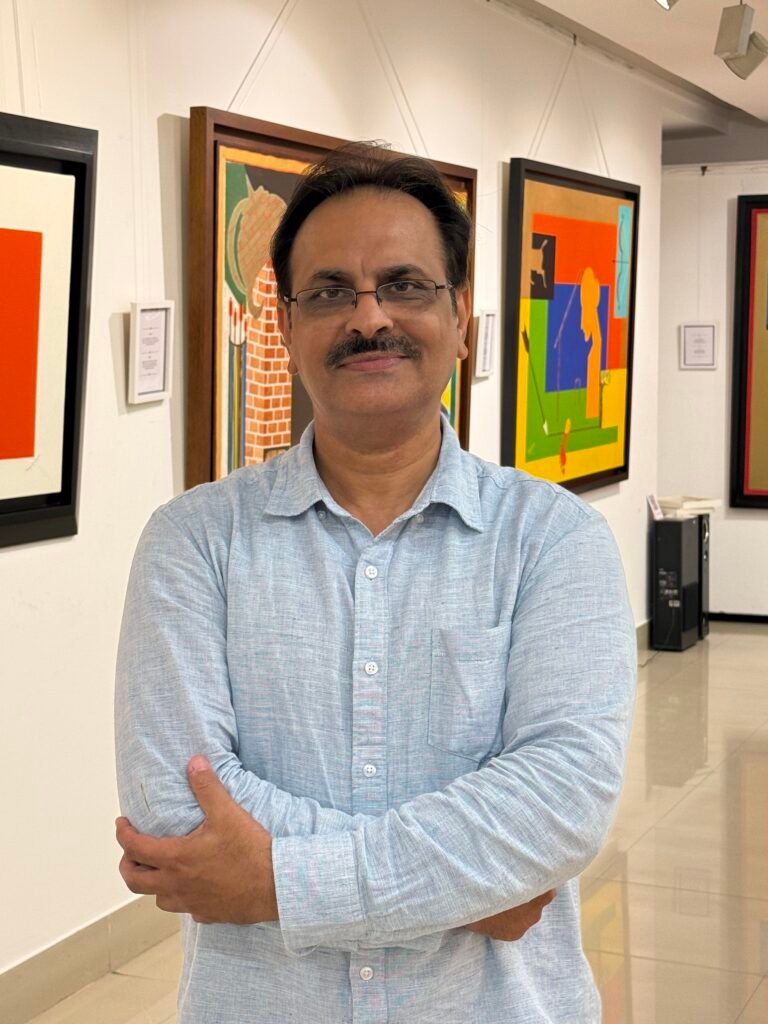
At a time when traditional knowledge and contemporary artistic expression are increasingly finding new points of connection, ETERNAL ECHOES, the solo exhibition by self-taught artist Pankaj Sachdeva, presents an engaging exploration of Indian philosophy, culture and timeless human values. Held at the AIFACS Gallery, New Delhi, from 19 September to 1 October 2026, the exhibition brings together a body of paintings in which symbolism becomes the principal language of communication.
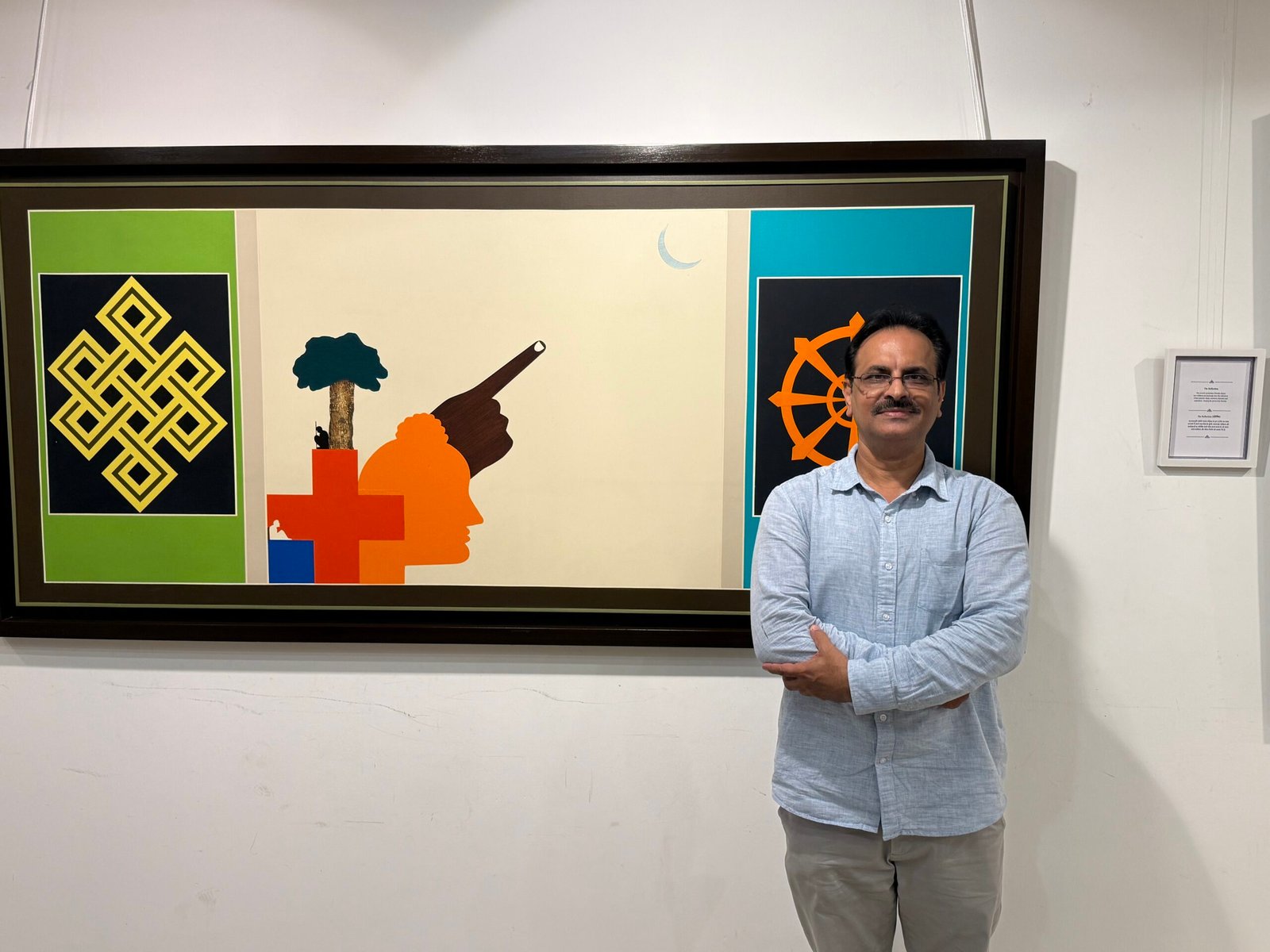
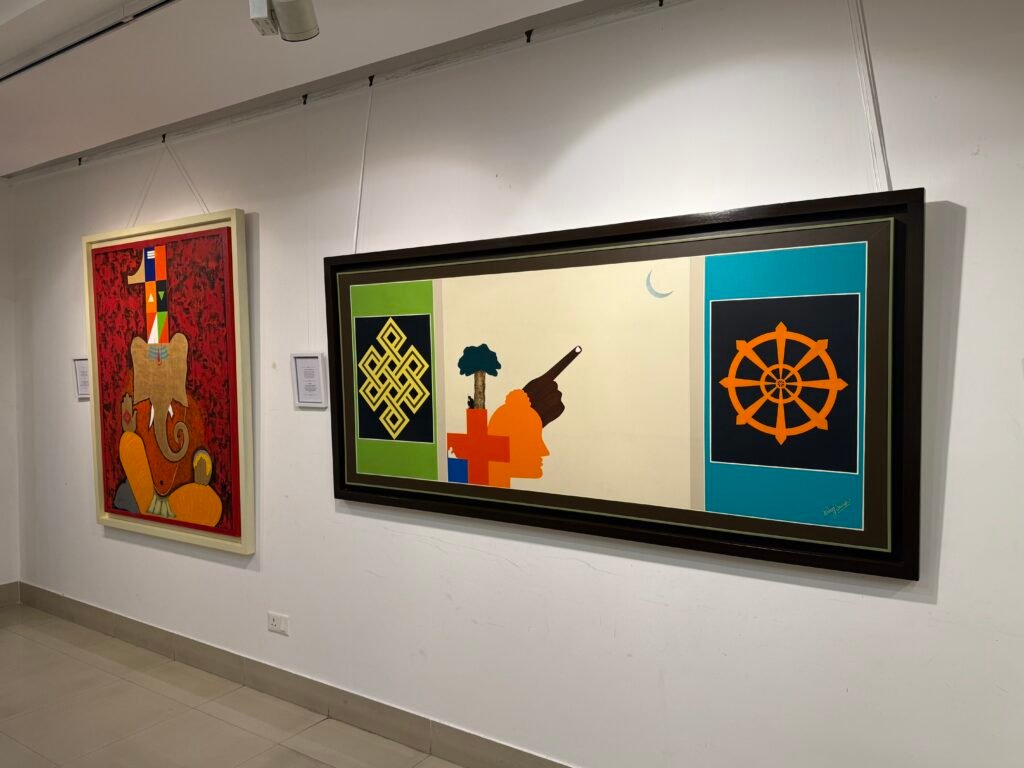
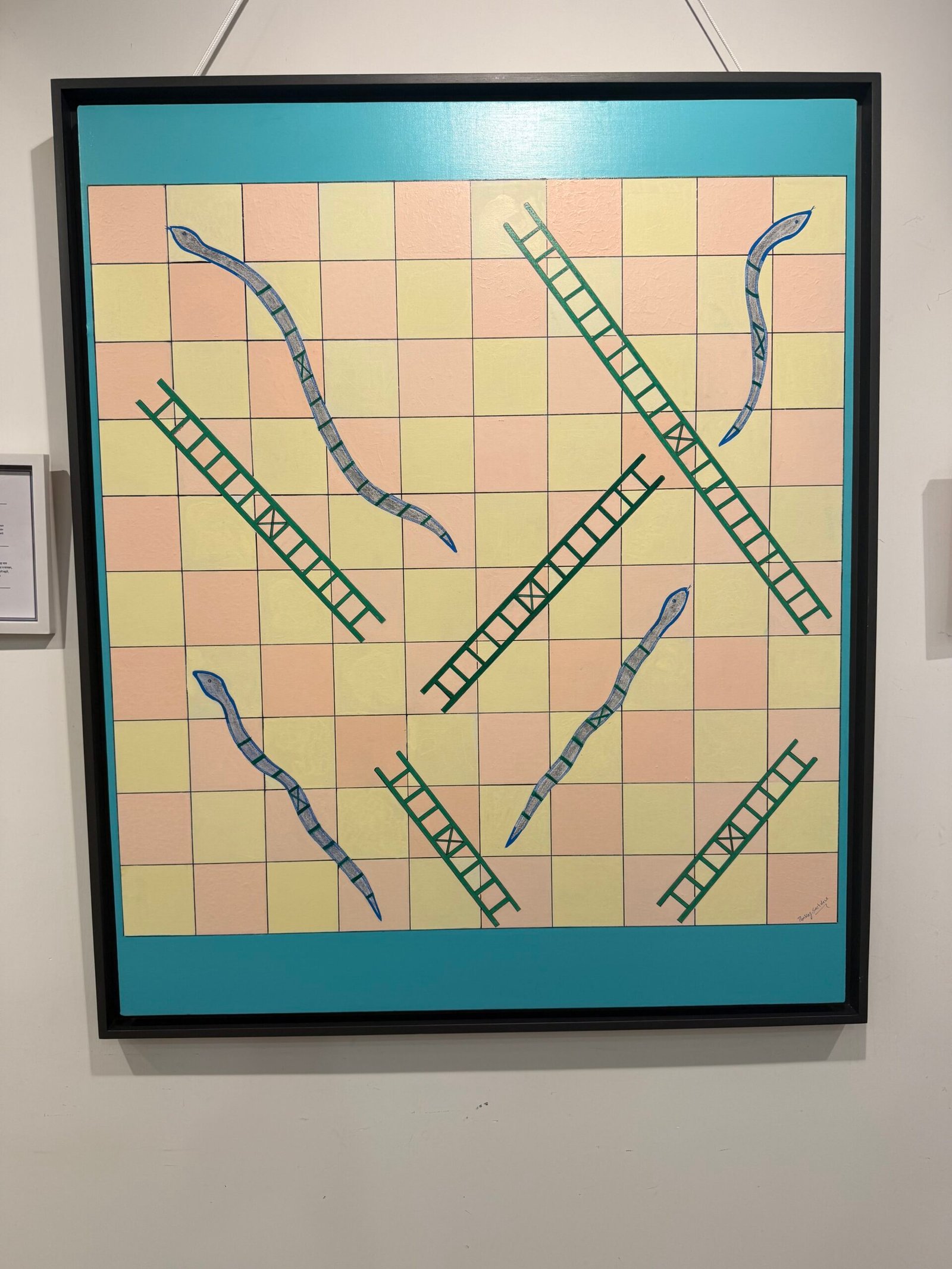
Sachdeva’s works draw inspiration from diverse Indian traditions and philosophical narratives, including the Ramayana, Mahabharata, Shiva-Shakti, Sikh history and philosophy, Sufism, Jainism and Buddhist thought. Yet the artist does not attempt to reproduce these traditions literally. Instead, he distils their essential ideas into geometric forms, bold colours, simplified figures and carefully arranged symbols.
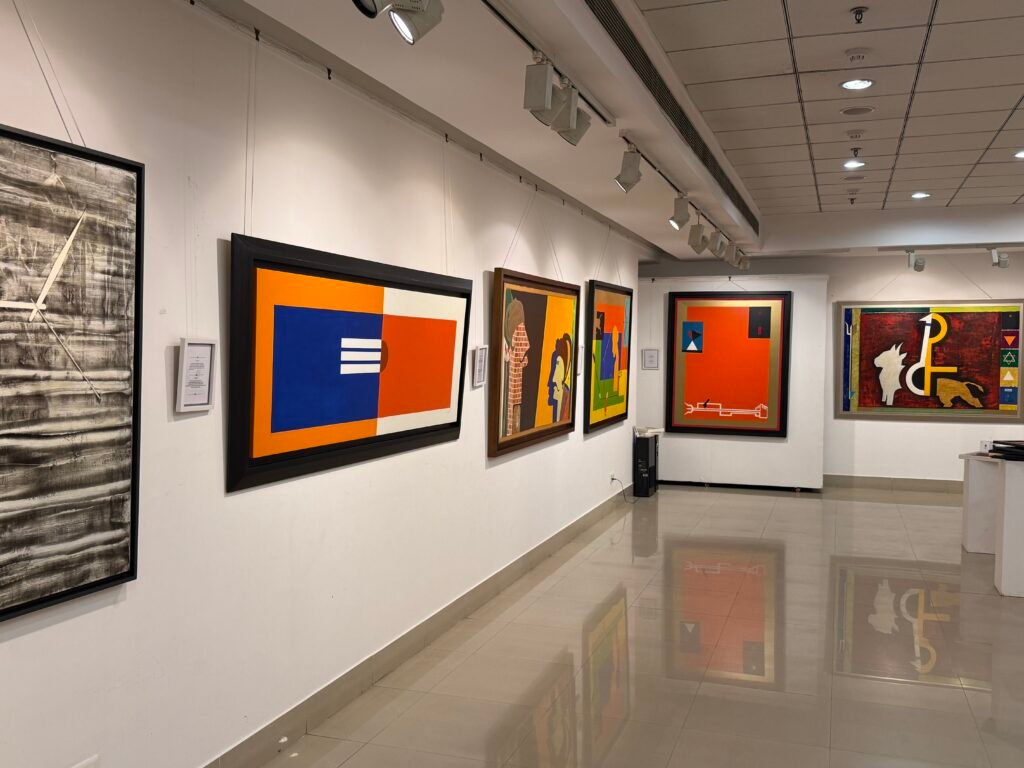
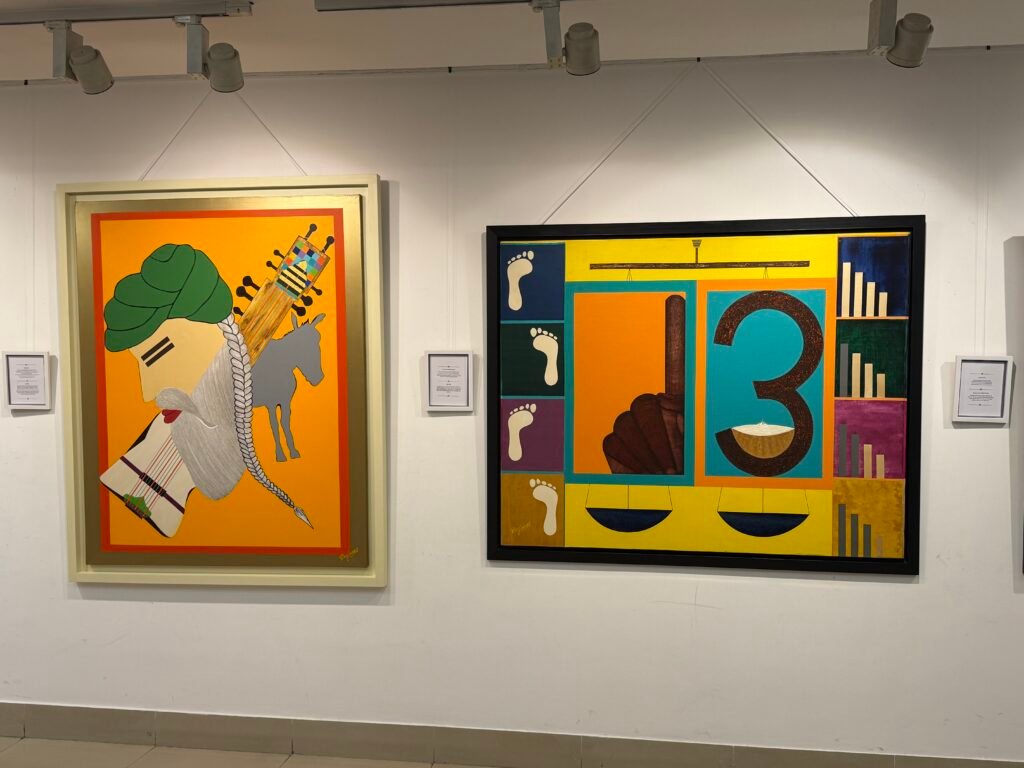
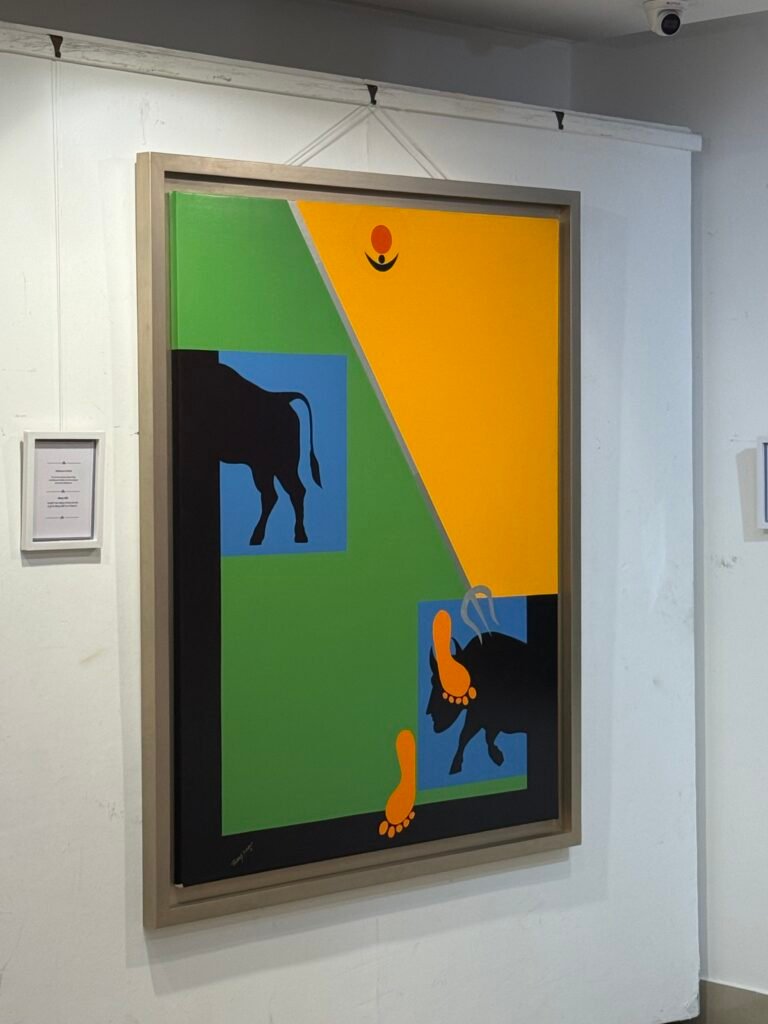
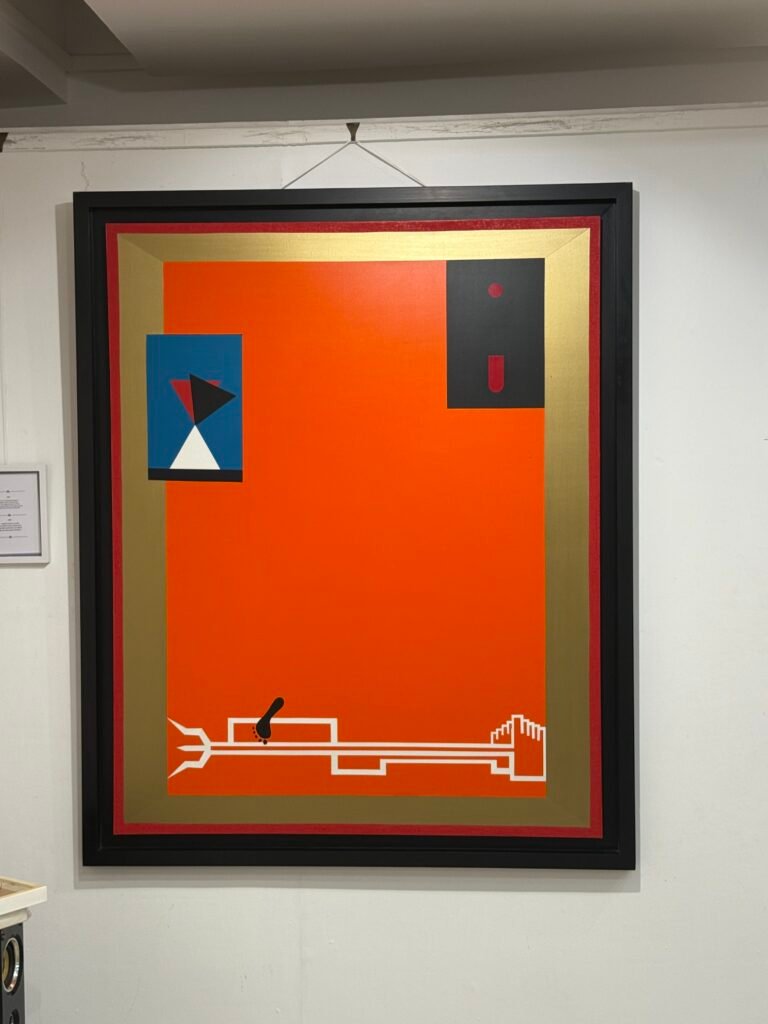
The visual character of the exhibition is immediately striking. Strong oranges, reds, greens, blues, blacks and golds create compositions that possess both visual energy and symbolic depth. Geometric structures frequently divide the picture plane, while figures, objects and signs appear almost like visual fragments of a larger philosophical narrative.
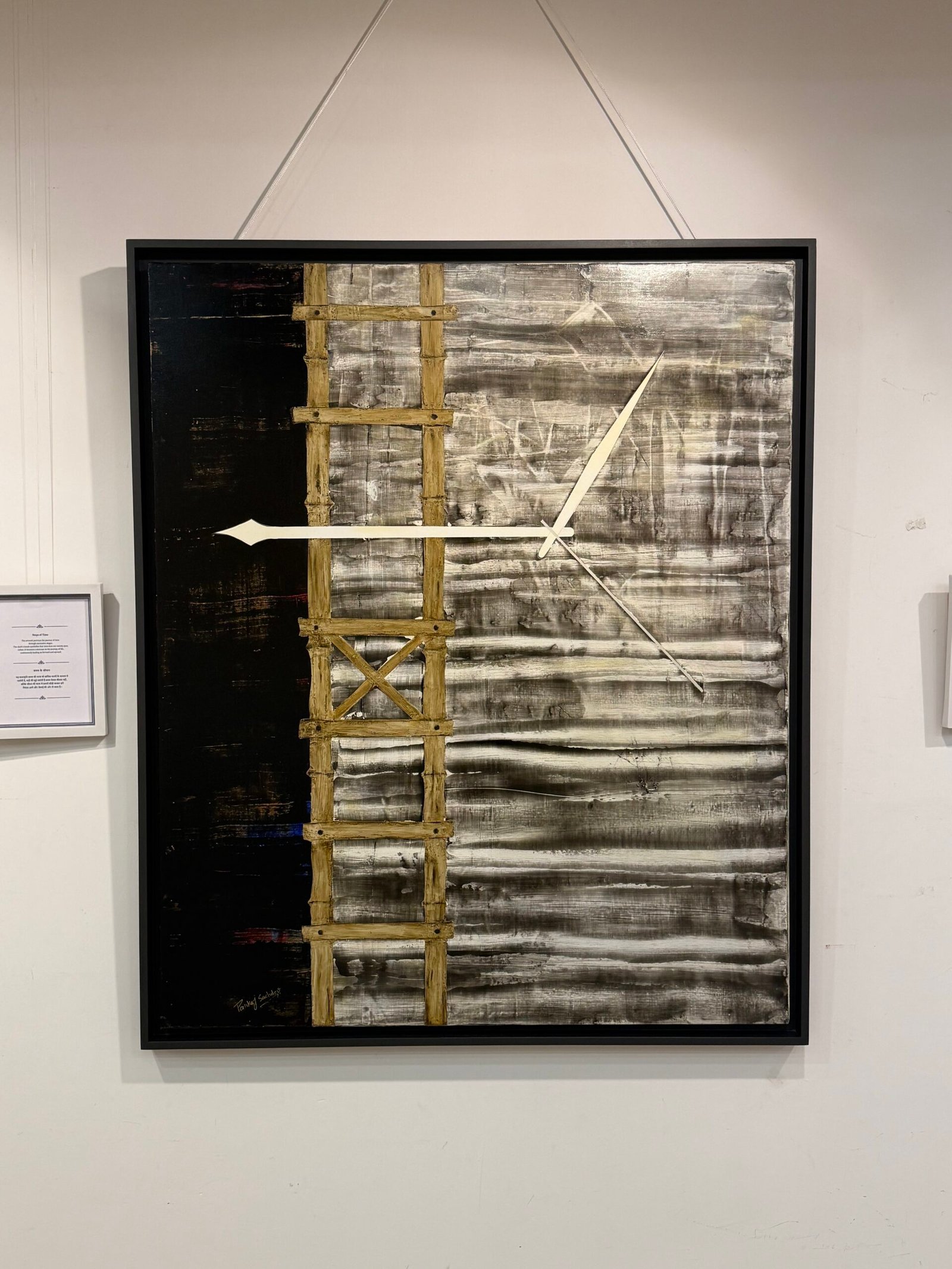
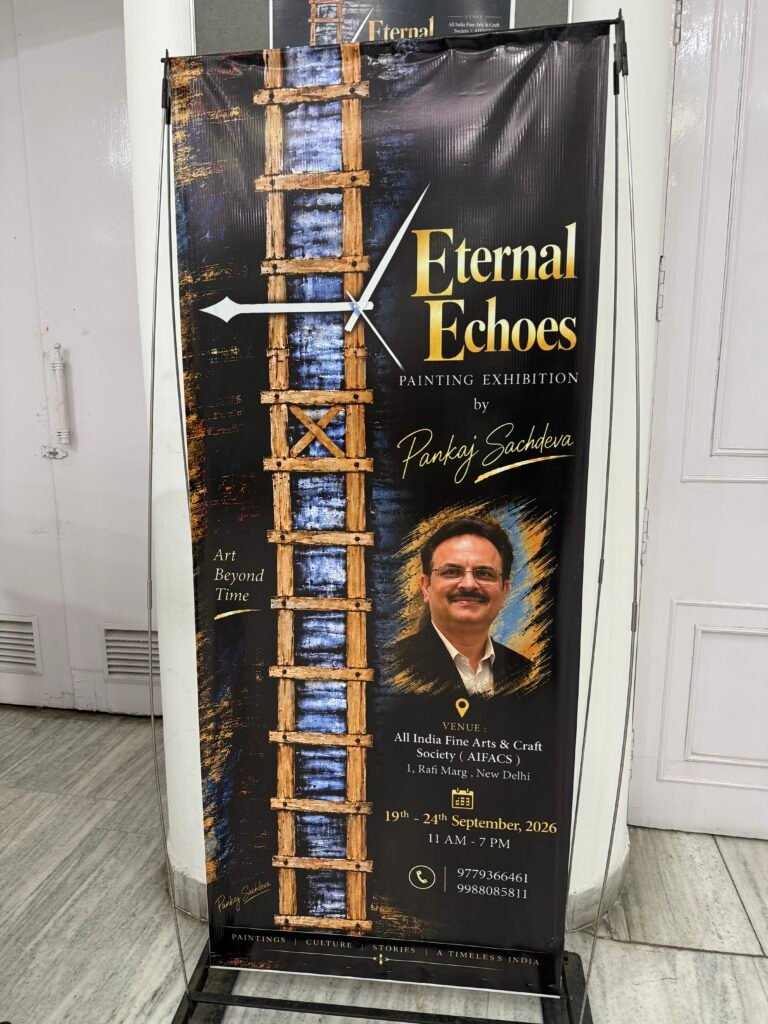
One particularly intriguing work combines a ladder-like structure with the hands of a clock. The composition can be read as an encounter between time, aspiration and the human journey. The ladder suggests movement or the desire to rise, while the clock introduces the unavoidable passage of time. Together, these elements create a meditation on existence and the limited nature of human time.
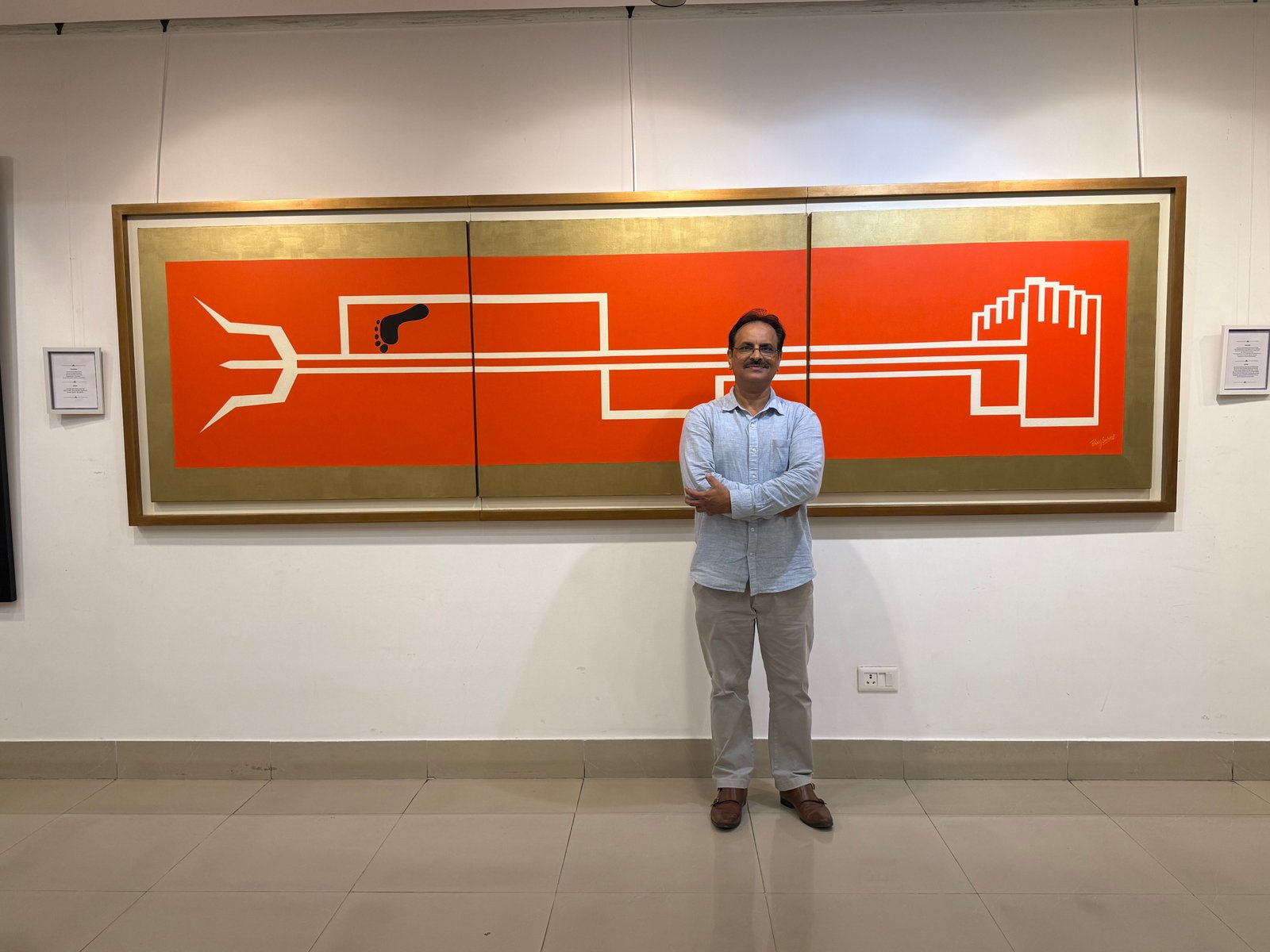
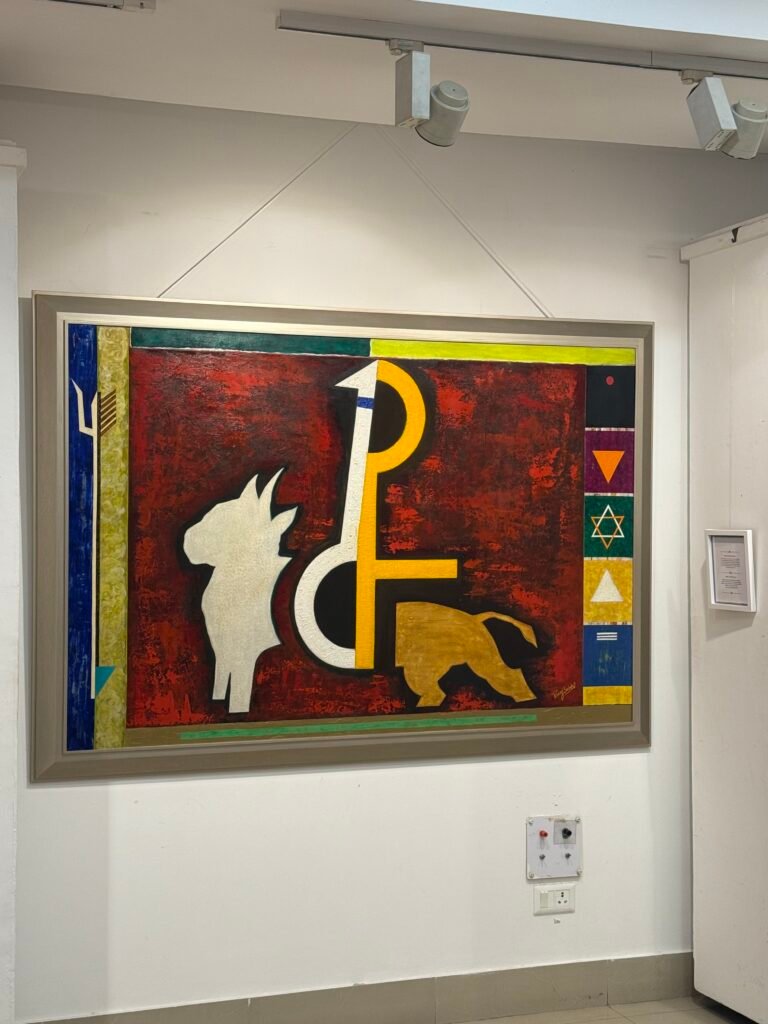
Another work brings together powerful symbolic forms associated with Shiva-Shakti, accompanied by animal imagery and a richly textured red ground. The contrast between geometric structure and organic forms creates a visual dialogue between opposing yet complementary energies. Rather than offering a single literal interpretation, the painting leaves space for viewers to contemplate balance, creation and the relationship between different forces of life.
The recurring imagery of footsteps in several paintings introduces another important dimension to Sachdeva’s practice. Feet can represent movement, pilgrimage, journey and the passage of an individual through life. By placing footprints within geometric and abstract compositions, the artist transforms an ordinary human gesture into a metaphor for spiritual and philosophical movement.
Other works incorporate references to music, religious symbolism, animals and human figures. These elements are not isolated decorative motifs; they function as components of a broader symbolic vocabulary. Sachdeva appears interested in how a simple visual sign can carry layers of cultural memory and philosophical meaning.
Colour plays an equally important role. The vibrant orange and yellow surfaces convey warmth and energy, while black and deep red introduce gravity and contrast. Gold and metallic-looking elements suggest associations with value, tradition and the sacred. The deliberate use of large areas of flat colour also gives many of the paintings a contemporary graphic quality.
What distinguishes the works is the artist’s effort to bridge tradition and modernity. The subjects emerge from India’s cultural and spiritual heritage, while the visual treatment is distinctly contemporary. Geometry, abstraction and simplified forms allow familiar ideas to be viewed from a different perspective.
As a self-taught artist, Sachdeva has developed his practice through sustained engagement with Indian cultural traditions. Over the years, he has participated in exhibitions and art interactions at institutions including Lalit Kala Akademi, New Delhi; Indian Academy of Fine Arts, Amritsar; Guru Nanak Dev University, Amritsar; Virsa Vihar, Jalandhar and Amritsar; and Arpana Art Gallery, New Delhi. His artistic journey includes more than 20 solo exhibitions and art sessions.
At the heart of ETERNAL ECHOES is the belief that ancient ideas can continue to speak to contemporary audiences. The exhibition does not simply look backwards at tradition; it attempts to reinterpret inherited ideas through a visual language that can be encountered by today’s viewers, particularly younger generations.
Ultimately, the paintings invite us to look beyond their immediate colours, forms and symbols. They encourage contemplation of time, identity, spirituality, compassion, balance, sacrifice, service and the human journey. In this sense, the “eternal echoes” of the exhibition are not merely echoes of the past. They are ideas that continue to find new forms and new meanings in the present.
Exhibition Details
Exhibition: ETERNAL ECHOES
Artist: Pankaj Sachdeva
Duration: 19 September–1 October 2026
Venue: AIFACS Gallery, 1, Rafi Marg, New Delhi
Closing Ceremony: 1 October 2026, 3:30 PM
Special Guest: Shri Ashok Porwal, Chief Office In-charge, Keshav Kunj, Rashtriya Swayamsevak Sangh (RSS) Headquarters, Jhandewalan, New Delhi.